


For millions of Pakistani farmers, the tube well is the lifeline of their crops. Without reliable irrigation, fields dry up, harvests fail, and families lose their primary source of income. But running a tube well on diesel or grid electricity has become a financial nightmare that is pushing small and mid-sized farmers toward bankruptcy.
Diesel prices have crossed PKR 290 per liter, and electricity tariffs for agricultural connections keep climbing with every quarterly adjustment. A single tube well running 8–10 hours a day during the wheat or rice season can cost a farmer PKR 80,000–150,000 per month in fuel or electricity. For most farming households earning PKR 300,000–500,000 per crop cycle, that leaves almost nothing for seeds, fertilizer, labor, or family expenses. Across Punjab and Sindh, this energy crisis is the number one reason why farming is becoming unsustainable for the average landowner.
Why Diesel and Grid Power Are Failing Pakistan’s Farmers
The problems with traditional energy sources for irrigation run deep. Diesel generators are expensive to operate, require constant maintenance, and break down frequently during the critical irrigation season. A typical 20 HP diesel engine consumes 4–5 liters of fuel per hour, costing PKR 1,200–1,500 per hour of operation. Over a 6-month growing season with daily usage, that adds up to PKR 500,000–800,000 — an amount that can wipe out a farmer’s entire profit margin.
Grid electricity is supposed to be cheaper, but the reality is different. Agricultural connections face scheduled load shedding of 8–14 hours daily in many rural areas. When power is available, it often comes during off-peak hours (late night), forcing farmers to irrigate at inconvenient times. The unreliable supply also damages submersible pumps, adding PKR 50,000–100,000 in annual repair costs.
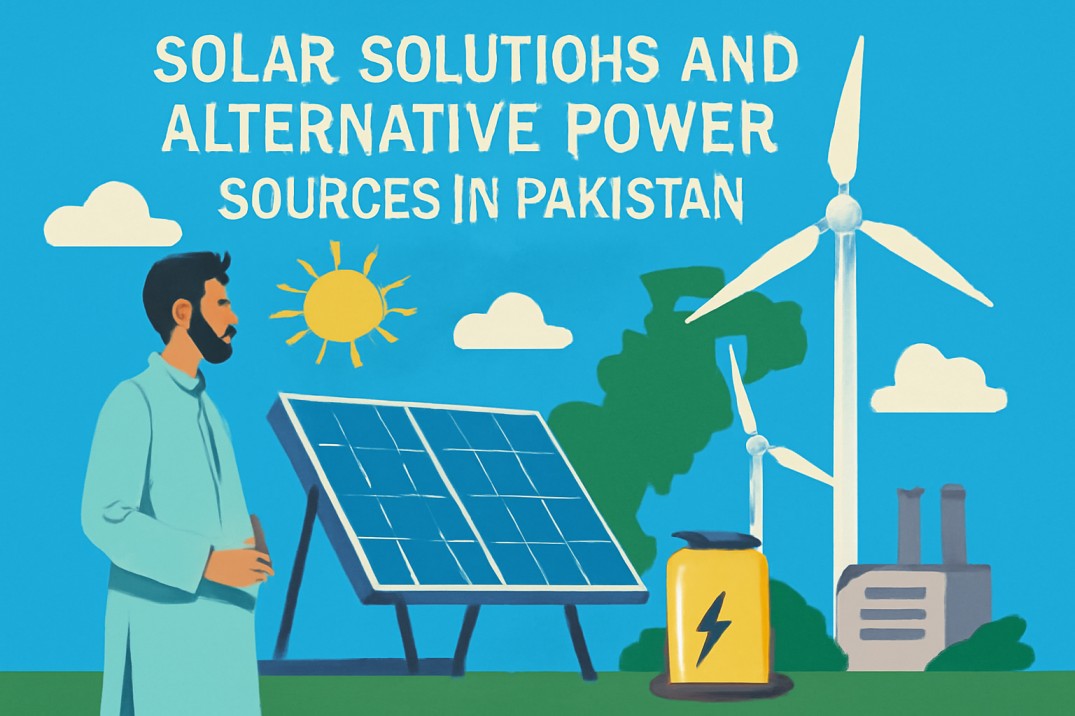
This is exactly why farmers across Punjab are rapidly adopting agricultural solar solutions to power their tube wells and irrigation systems. Solar eliminates both the fuel cost and the grid dependency problem in one move — giving farmers control over their most critical resource: water.
How Solar Tube Wells Work — A Simple Breakdown
A solar-powered tube well system is surprisingly straightforward. Here are the core components:
- Solar Panels: Mounted on ground-based frames near the tube well. A typical agricultural setup uses 15–30 panels depending on pump size.
- Solar Pump Inverter: Converts the DC electricity from solar panels into AC power to drive the submersible or centrifugal pump. Modern inverters automatically adjust pump speed based on available sunlight.
- Submersible Pump: The same type of pump used in conventional tube wells, but now powered entirely by solar energy.
- Mounting Structure: Ground-mounted steel or aluminum frames angled for maximum sun exposure. These are built to withstand high winds and harsh weather.
The system starts generating power at sunrise and runs the pump throughout the day. Peak performance occurs between 9 AM and 4 PM — which conveniently aligns with the best irrigation hours. No batteries are needed for most agricultural setups since irrigation happens during daylight hours.
The Real Cost Savings — Diesel vs. Solar Side by Side
Numbers tell the story better than anything else. Here is a comparison based on a standard 10 HP tube well running in central Punjab:
| Cost Factor | Diesel Tube Well | Solar Tube Well |
|---|---|---|
| Fuel/electricity cost per month | PKR 120,000 | PKR 0 |
| Annual maintenance | PKR 60,000 | PKR 10,000 |
| System lifespan | 5–7 years | 25–30 years |
| Annual operating cost | PKR 780,000 | PKR 10,000 |
| 5-year total cost | PKR 3,900,000 | PKR 850,000 (system cost + maintenance) |
Over a 5-year period, a farmer switching from diesel to solar saves approximately PKR 3,000,000 — money that can be reinvested in better seeds, modern farming equipment, land expansion, or family welfare. The solar system continues to deliver free power for another 20+ years after that.
Government Programs Supporting Solar Agriculture in Pakistan
The federal and provincial governments have recognized the critical role of solar energy in agriculture and launched several support programs:
- Chief Minister Punjab Solar Tube Well Program: Provides subsidized solar tube well installations for farmers with landholdings under 12.5 acres, covering up to 50% of the system cost.
- AEDB Solar Irrigation Initiative: The Alternative Energy Development Board offers technical support and financing facilitation for agricultural solar projects across Pakistan.
- SBP Green Financing: The State Bank’s refinance scheme provides loans at 6% markup for solar installations — far below the standard agricultural lending rate of 18–22%.
- Zero Duty on Solar Equipment: All solar panels, inverters, and pumping equipment are exempt from customs duty and sales tax, reducing upfront costs significantly.
According to the Food and Agriculture Organization (FAO) of the United Nations, solar-powered irrigation is one of the most effective strategies for improving food security in developing countries, with Pakistan identified as a priority nation for agricultural energy transition.
Choosing the Right Solar System for Your Farm
Not every farm has the same irrigation needs. The right solar system depends on several factors:
Tube Well Depth and Water Table
Farms with shallow water tables (up to 100 feet) can use smaller, more affordable solar systems. Deep bore wells (200–400 feet) in areas like southern Punjab and Sindh require higher-capacity pumps and larger solar arrays to maintain adequate water flow.
Land Size and Crop Type
Rice paddies and sugarcane fields require significantly more water than wheat or cotton. A 10-acre rice farm may need a 15–20 HP solar pump system, while the same acreage under wheat might only need 7.5–10 HP. Matching the system to your specific crop rotation maximizes efficiency.
Drip Irrigation Integration
Combining solar pumping with drip irrigation is a game-changer. Drip systems use 30–50% less water than flood irrigation, meaning a smaller solar setup can irrigate the same area. This combination is particularly effective for orchards, vegetable farms, and high-value crops.
Common Concerns Farmers Have About Solar — And the Facts
- “Solar does not work in cloudy weather”: Solar panels produce 20–40% of their rated output even on heavily overcast days. In Pakistan’s climate, cloudy days are rare during the main growing seasons (March–June and October–November).
- “The upfront cost is too high”: With government subsidies covering up to 50% and SBP financing at 6%, the actual out-of-pocket cost for many farmers is PKR 300,000–500,000 — recoverable within 6–12 months through diesel savings.
- “Solar equipment breaks easily”: Tier-1 solar panels carry 25-year warranties and have no moving parts. Modern solar pump inverters are specifically designed for harsh agricultural environments and carry 5–10 year warranties.
- “I cannot irrigate at night”: Most crops respond better to daytime irrigation when evapotranspiration rates align with water absorption. For farms requiring night irrigation, hybrid systems with battery storage or grid backup are available.
Conclusion
The economics of farming in Pakistan have fundamentally changed. Diesel-powered tube wells that once seemed like the only option are now the most expensive choice a farmer can make. Solar-powered irrigation eliminates fuel costs, removes grid dependency, and pays for itself within 1–3 years. With government subsidies, easy financing, and panel prices at all-time lows, 2026 is the year for Pakistani farmers to break free from the diesel trap. Every season you wait is money lost — and in farming, those margins matter more than anywhere else.
Frequently Asked Questions
1. How much does a solar tube well system cost in Pakistan?
For a standard 10 HP system suitable for 10–15 acres, the cost ranges from PKR 700,000 to PKR 1,000,000 before subsidies. With government programs covering up to 50%, the actual cost can drop to PKR 350,000–500,000.
2. Can solar panels power a submersible pump for a deep bore well?
Yes. Solar systems are available for bore wells up to 400+ feet deep. Deeper wells require higher-capacity pumps (15–30 HP) and larger solar arrays, but the technology handles deep water extraction efficiently.
3. How many acres can a solar tube well irrigate?
A 10 HP solar system can irrigate 10–15 acres using flood irrigation or 20–25 acres with drip irrigation. Larger systems (20–30 HP) can cover 30–50 acres depending on crop type and water requirements.
4. Do solar tube wells work during the monsoon season?
Solar panels generate reduced but usable power during monsoon months. However, irrigation demand also drops significantly during monsoon due to rainfall, so the lower solar output typically matches the reduced water needs.
5. What maintenance does a solar tube well require?
Maintenance is minimal — periodic cleaning of solar panels (every 2–4 weeks), checking cable connections, and lubricating the pump as needed. There are no fuel filters, oil changes, or engine overhauls like with diesel systems.
6. How long does a solar-powered irrigation system last?
Solar panels last 25–30 years with performance warranties. Pump inverters typically last 10–15 years, and submersible pumps have lifespans of 8–12 years. The overall system delivers decades of service with only minor component replacements.
7. Can I get government financing for a solar tube well?
Yes. The State Bank of Pakistan offers subsidized green financing at rates as low as 6%. Additionally, provincial programs like the CM Punjab Solar Tube Well Program provide direct subsidies of up to 50% for eligible farmers.
8. Is it better to choose an on-grid or off-grid solar system for farming?
For most agricultural applications, off-grid solar (direct solar pumping without batteries) is the most cost-effective option since irrigation happens during daylight hours. Hybrid systems with grid or battery backup are recommended only for farms needing 24-hour water access.
9. What happens on very cloudy days when solar output drops?
The pump runs at reduced speed on cloudy days, delivering less water but still functioning. Since most Pakistani growing seasons coincide with sunny weather, prolonged cloudy periods are rarely an issue. Farms with critical water needs can add a small backup generator for emergencies.
10. Can I use solar power for other farm operations besides the tube well?
Absolutely. Excess solar capacity can power farm lighting, cold storage units, fodder cutters, milking machines, and grain dryers. Many farmers are now designing solar systems that serve multiple farm functions beyond just irrigation.
11. How quickly does a solar tube well pay for itself?
For farmers currently spending PKR 80,000–150,000 per month on diesel, the payback period is typically 8–18 months. With government subsidies, some farmers recover their investment within a single growing season.
12. Will installing solar panels take up valuable farmland?
A typical 10 HP solar system requires approximately 800–1,000 square feet of ground space — roughly the size of a small room. The panels can also be installed on elevated structures that allow farming underneath, so no productive land is lost.
