


Rising electricity tariffs have become the single biggest threat to profit margins for manufacturers across Pakistan. In 2025 alone, industrial electricity rates jumped by over 35%, and the trend shows no signs of slowing down. Factory owners in Lahore, Faisalabad, Karachi, and Gujranwala are now paying more for power than for raw materials — a situation that was unthinkable just five years ago.
The good news? A growing number of Pakistani manufacturers have already found a way out. By adopting smarter energy strategies — from renewable power generation to load optimization and net metering — these factories have slashed their electricity bills by 50% to 70%. This guide breaks down exactly how they did it, and how your factory can do the same in 2026.
Why Energy Costs Are Spiraling Out of Control for Pakistani Factories
Pakistan’s industrial sector consumes roughly 28% of the country’s total electricity. Yet, the pricing structure has never favored manufacturers. Between fuel adjustment charges, capacity payments to idle power plants, and taxes layered on top of base tariffs, the actual per-unit cost for factories often exceeds PKR 65–70.
On top of that, load shedding remains a persistent problem. Many factory owners run diesel generators as backup — adding PKR 80–100 per unit to their costs during outages. Combine grid electricity with generator fuel, and some manufacturers spend over PKR 5 million per month on energy alone.
The result? Pakistani goods become less competitive globally, profit margins shrink, and smaller manufacturers are forced to shut down entirely. The factories that survive and grow in 2026 will be the ones that take control of their energy supply.
The Renewable Energy Revolution Hitting Pakistan’s Industrial Zones
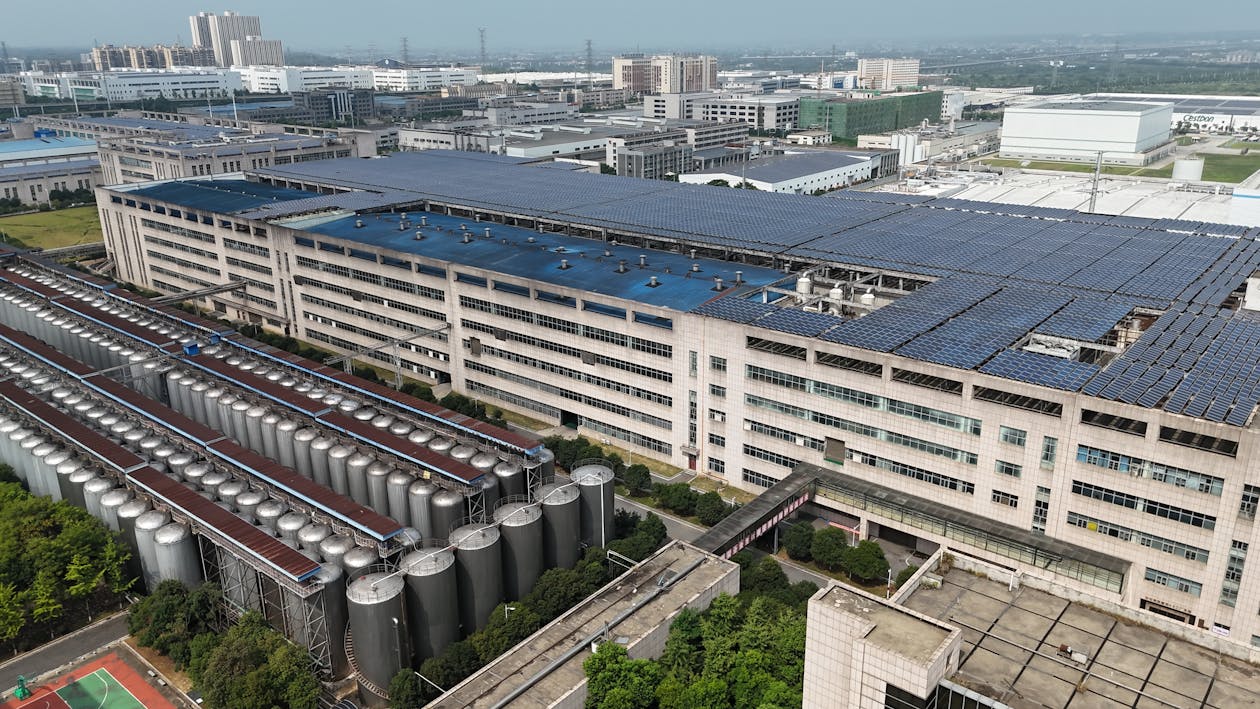
The shift is already happening. Drive through any industrial area in Lahore or Faisalabad, and you will see rooftops covered with solar panels. This is not a trend driven by environmental activism — it is driven by pure economics.
An industrial solar system sized between 100 kW and 500 kW can pay for itself within 2.5 to 4 years for most factories. After that, the electricity it generates is essentially free for the next 20+ years. With net metering policies now active across Punjab, factories can even sell excess power back to the grid, turning their rooftops into revenue-generating assets.
Several textile mills in Lahore have reported annual savings exceeding PKR 25 million after switching to solar-powered operations. Steel fabrication units, food processing plants, and packaging factories are following suit. The message is clear: renewable energy is no longer optional for manufacturers who want to stay competitive.
Five Proven Strategies to Reduce Your Factory’s Energy Bill
Here is a practical breakdown of the most effective approaches Pakistani manufacturers are using right now:
1. Right-Size Your Power Generation
Many factories are either oversized or undersized in their power systems. A proper energy audit reveals exactly how much power each production line, HVAC unit, and lighting circuit consumes. Once you have accurate data, you can design a power system — whether grid-tied, hybrid, or off-grid — that matches your actual demand without waste.
2. Leverage Net Metering to Its Full Potential
Net metering allows your factory to export surplus solar electricity to the grid and receive credits on your bill. In Punjab, the process has become more streamlined. Factories generating more power than they consume during weekends or off-peak shifts can offset a significant portion of their monthly bills through these credits.
3. Switch to Hybrid Power Systems
A hybrid setup combines solar generation with battery storage and grid connectivity. During peak sunlight hours, solar panels handle the load. Batteries kick in during cloud cover or early evening. The grid serves as a backup only when needed. This combination eliminates generator dependency almost entirely.
4. Optimize Load Distribution
Shifting heavy machinery operations to peak solar generation hours (10 AM – 3 PM) maximizes the use of free solar power. Many factories have restructured their production schedules around solar availability — running energy-intensive processes during the day and lighter tasks during evenings.
5. Invest in Energy-Efficient Equipment
Replacing old motors, compressors, and lighting with energy-efficient alternatives can reduce consumption by 15–25%. Variable frequency drives (VFDs) on motors, LED lighting throughout the facility, and modern HVAC systems deliver measurable savings that compound over time.
What the Numbers Actually Look Like — A Real Cost Comparison
To put this into perspective, here is a comparison between a typical factory running on grid + generator power versus one that has adopted solar with net metering:
| Cost Factor | Grid + Generator | Solar + Net Metering |
|---|---|---|
| Monthly electricity bill | PKR 4,500,000 | PKR 1,200,000 |
| Generator fuel cost | PKR 1,800,000 | PKR 0 |
| Maintenance costs | PKR 350,000 | PKR 80,000 |
| Total monthly energy cost | PKR 6,650,000 | PKR 1,280,000 |
| Annual savings | — | PKR 64,440,000 |
These figures are based on a mid-sized manufacturing facility consuming approximately 150,000 kWh per month. The exact numbers will vary based on factory size, location, and energy consumption patterns, but the trend is consistent across industries.
According to the International Renewable Energy Agency (IRENA), the cost of solar photovoltaic technology has dropped by 90% over the past decade, making it the cheapest source of new electricity generation in most parts of the world — including South Asia.
Government Incentives and Financing Options Available in 2026
The Pakistani government has introduced several policies to encourage industrial solar adoption:
- Accelerated Depreciation: Factories can claim up to 90% depreciation on solar equipment in the first year, significantly reducing taxable income.
- Duty-Free Imports: Solar panels, inverters, and related equipment are exempt from customs duty, making systems more affordable.
- State Bank Green Financing: The SBP’s refinance scheme offers subsidized financing for renewable energy projects at rates as low as 6%, far below market lending rates.
- Net Metering Revenue: Under NEPRA regulations, factories earn credits for every unit of surplus electricity exported to the grid.
- Provincial Programs: Punjab and Sindh have launched dedicated solar incentive programs targeting industrial clusters, with additional subsidies for first-time adopters.
These incentives, combined with falling equipment costs, make 2026 the most financially attractive year to invest in factory-level renewable energy.
Common Mistakes Factories Make When Switching to Renewable Power
- Choosing the cheapest installer: Low-cost installations often use inferior components that degrade within 3–5 years. Always verify panel efficiency ratings, inverter certifications, and installer track records.
- Ignoring structural assessments: Not every rooftop can handle the weight of a large solar array. A proper structural survey before installation prevents costly repairs later.
- Skipping the energy audit: Without accurate consumption data, your system may be undersized (leading to continued grid dependency) or oversized (wasting capital).
- Neglecting maintenance: Solar panels need periodic cleaning and inspection. Dust buildup alone can reduce output by 15–20% in Pakistan’s climate.
- Not planning for future expansion: If you plan to add production lines or expand operations, your power system should be designed with scalability built in.
Conclusion
The manufacturers who thrive in Pakistan’s competitive market over the next decade will be those who treat energy as a strategic advantage, not just another expense. With electricity tariffs climbing every quarter, the cost of inaction is far greater than the cost of switching to smarter, cleaner power solutions. Whether you run a textile mill, a steel plant, or a food processing unit, the technology and financing options are available right now to cut your energy costs by 50–70%. The only question is how soon you act.
Frequently Asked Questions
1. How much can a factory realistically save on energy costs by switching to solar?
Most factories in Pakistan report savings between 50% and 70% on their total energy bills after installing a properly sized solar power system with net metering. The exact savings depend on your current consumption, system size, and how effectively you use net metering credits.
2. What is the typical payback period for a factory solar installation?
For mid-sized to large factories, the payback period typically ranges from 2.5 to 4 years. After that, the electricity generated is essentially free for the remaining 20–25 year lifespan of the panels.
3. Can a factory run entirely on solar power without any grid connection?
While it is technically possible with sufficient battery storage, most factories opt for a hybrid setup that combines solar with grid connectivity. This provides the best balance of cost savings and reliability, especially for operations that run 24/7.
4. What size solar system does a typical factory need?
System size depends on your electricity consumption. A factory using 50,000 kWh per month would typically need a 100–150 kW system. Larger facilities consuming 200,000+ kWh may require 400–500 kW or more. An energy audit is the best way to determine the right size.
5. How does net metering work for factories in Pakistan?
Net metering allows your factory to export surplus solar electricity to the grid. Your electricity meter runs backward when you are generating more than you consume, and you receive credits that offset your bill. NEPRA regulates the process, and applications are handled through your local DISCO (distribution company).
6. Are there government subsidies or financing options for industrial solar projects?
Yes. The State Bank of Pakistan offers green financing at subsidized rates (as low as 6%). Additionally, solar equipment is exempt from customs duty, and factories can claim accelerated depreciation of up to 90% in the first year, reducing taxable income substantially.
7. How long do industrial solar panels last?
High-quality Tier-1 solar panels come with performance warranties of 25–30 years and typically maintain 80–85% of their original efficiency even after 25 years. Inverters generally last 10–15 years before needing replacement.
8. Will solar panels work during cloudy or rainy days?
Yes, solar panels continue to generate electricity on cloudy days, though at reduced capacity (typically 20–40% of peak output). A properly designed hybrid system with battery storage or grid backup ensures uninterrupted power regardless of weather conditions.
9. What maintenance do industrial solar systems require?
Maintenance is minimal. Regular cleaning (every 2–4 weeks depending on dust levels), annual electrical inspections, and periodic inverter checks are usually sufficient. Most reputable installers offer maintenance packages as part of their service.
10. Does installing solar panels affect the structural integrity of a factory roof?
A proper installation should not compromise your roof. However, a structural assessment must be conducted before installation to ensure the roof can handle the additional weight. Ground-mounted systems are an alternative if the rooftop is not suitable.
11. Can a factory sell excess solar electricity for profit?
Under current net metering regulations, factories can offset their bills with exported electricity but cannot directly sell power for profit above their consumption. However, the credits effectively reduce your bill to near zero, and future policy changes may open up direct selling options.
12. What happens to a factory solar system during a power outage?
Grid-tied systems without battery storage will shut down during outages for safety reasons (anti-islanding protection). Hybrid systems with battery storage continue operating, providing backup power to critical loads during grid failures.
