

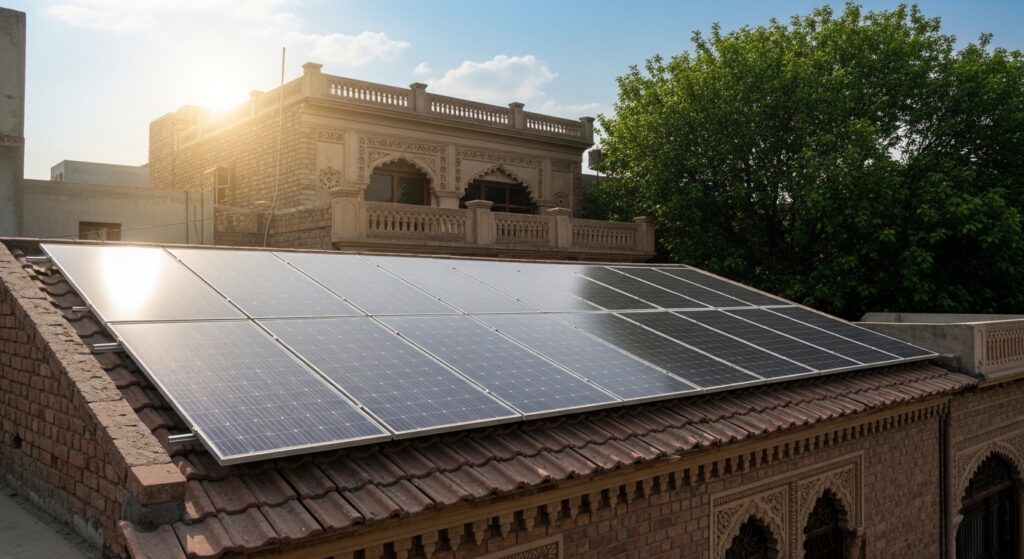
Choosing the right solar company in Lahore isn’t just about getting the lowest price. It’s about finding a partner who will deliver reliable energy savings for decades to come. Given that solar power holds the key to Pakistan’s energy crisis as one of the most efficient and cost-effective renewable energy sources, making an informed decision has never been more critical.
The challenge is identifying the best solar company in Lahore among dozens of providers claiming expertise. We’ve created this guide to help you evaluate credentials, understand technical requirements, compare costs, and ask the right questions before signing any contract. By the end, you’ll know exactly what to look for in a solar installation partner.
Evaluating Solar Company Credentials
Credentials separate reliable installers from inexperienced operators. Before you invest in solar panels, verify that your chosen solar company in Lahore meets specific regulatory and operational standards. These benchmarks protect your investment and guarantee proper installation.
AEDB Certification and Registration
The Alternative Energy Development Board (AEDB), now merged into the Private Power & Infrastructure Board (PPIB), provides formal certification for companies operating in Pakistan’s renewable energy sector. This registration verifies technical capability, financial standing, and compliance with regulatory standards.
AEDB certification is mandatory for net-metering installations and government-funded projects. Companies without valid registration cannot legally install on-grid systems in Pakistan. The certification opens access to bank financing schemes and large commercial tenders, which directly benefits you as a homeowner seeking financing options.
Registration validity extends for three years under current policy[1]. Certification requirements include valid PEC registration, company profile demonstrating technical capability, qualified electrical and mechanical engineers on staff, audited financial statements, and a bank guarantee of PKR 500,000 for four years. Categories range from C-3 (up to 250 kW) for residential installations to C-1 (500 kW and above) for large-scale projects.
Years of Operation in Lahore
Experience matters when installing solar systems on your property. Established companies have refined their processes through hundreds of installations and understand Lahore’s specific climate conditions and regulatory requirements.
Companies with 10+ years of operation demonstrate market stability and proven track records. They’ve survived market fluctuations and built reputations worth protecting. Newer companies may offer competitive prices but lack the operational history that indicates reliability.
Portfolio of Residential Projects
Request detailed project portfolios from potential installers. AEDB registration itself requires proof of completed installations, making project portfolios a mandatory part of certification documentation. Ask for specific addresses of residential installations in Lahore, completion dates, and system capacities.
Companies serving diverse clientele from homeowners to factories show versatility in handling different project scales. Notable installations for recognized businesses indicate capability and market trust.
Partnerships with Tier 1 Solar Brands
The best solar company in Lahore partners with internationally recognized Tier 1 manufacturers. These brands include Jinko Solar, Canadian Solar, Trina Solar, JA Solar, and Longi Solar. Tier 1 panels come with 25-year performance warranties and proven efficiency records.
Partnerships with authorized brands guarantee genuine products rather than counterfeit panels. Companies offering multiple Tier 1 options provide flexibility in balancing quality and budget requirements.
Technical Aspects You Need to Understand
Understanding technical specifications helps you evaluate proposals from any solar company in Lahore. These fundamentals determine your system’s performance and longevity.
Solar Panel Efficiency and Quality
Panel efficiency measures how much sunlight converts into electricity. Most residential panels now achieve 21-22% efficiency, with premium options reaching 23% or higher. Monocrystalline panels consistently outperform polycrystalline alternatives because their single-crystal silicon structure allows electrons to move freely without resistance from grain boundaries.
Monocrystalline panels reach efficiencies above 23% in some cases, while polycrystalline models typically top out below 20%. The difference matters when roof space is limited. High-efficiency panels generate more power per square meter, requiring less installation area.
Temperature coefficient is another critical factor. Monocrystalline panels have lower temperature coefficients (around -0.3% to -0.5% per degree Celsius), meaning they lose less efficiency as temperatures rise. This matters in Lahore’s hot climate where roof temperatures regularly exceed 50°C.
Inverter Types and Their Functions
String inverters connect multiple panels in series to a single central unit. They’re cost-effective and achieve 95-98% conversion efficiency. However, shading on one panel reduces output for the entire string.
Microinverters attach to individual panels, allowing each to operate independently. This design delivers 5-25% more energy in real-world conditions when partial shading exists. Panel-level monitoring makes troubleshooting straightforward.
Hybrid inverters combine solar conversion with battery management capabilities. They cost more upfront but provide energy storage and backup power during outages. For Lahore’s frequent load-shedding, hybrid systems offer practical advantages.
System Sizing for Your Home
Proper sizing starts with your annual electricity consumption. The average home uses 10,400 kWh yearly. Divide your monthly usage by 30 to get daily consumption, then divide by Lahore’s peak sun hours (approximately 5-6 hours) to determine required system capacity.
Account for 20% additional capacity to offset panel degradation and real-world inefficiencies. A 1 kW system typically requires 100 square feet and produces roughly 1,100 kWh annually.
Installation Quality Standards
IEC 61215 certification verifies panels pass 19 stress tests simulating years of environmental exposure. Panels must retain 95% of initial power rating after testing. IEC 61730 addresses safety aspects including electrical, mechanical, and fire hazards. The best solar company in Lahore installs only certified equipment meeting these international standards.
Cost Breakdown and Financing Options
Financial planning determines whether solar makes sense for your property. Any solar company in Lahore should provide transparent cost breakdowns and financing options before you commit.
Initial Investment Components
Hardware accounts for roughly 46% of total system costs. Solar panels themselves represent about 12-13% of the project, while inverters and balance of system equipment contribute 33%. Installation labor makes up only 7% of expenses.
Soft costs dominate pricing structures. Sales and marketing consume 18% of total costs, overhead reaches 11%, and permitting plus interconnection fees add another 8%. Design, engineering, and project management account for 28% of your investment.
State Bank Solar Financing Schemes
The State Bank of Pakistan offers concessionary financing under three categories. Category II specifically targets residential installations up to 1 MW for homeowners. This category provides financing up to Rs. 400 million per borrower with a maximum tenor of 10 years including a 3-month grace period[124].
The end-user markup rate is capped at 6% per annum[124], significantly below commercial lending rates. Shariah-compliant versions are available through Islamic banks. Major banks including Meezan Bank, Bank Alfalah, Allied Bank, and Al Baraka offer residential solar financing with tenures ranging from 5 to 7 years and amounts up to Rs. 5 million.
Payback Period Calculation
Calculate your payback period by dividing total system cost (minus incentives) by annual savings. For instance, a system costing Rs. 2,000,000 that saves Rs. 200,000 annually yields a 10-year payback period.
Most residential systems achieve payback within 6 to 12 years. The best solar company in Lahore factors in electricity rate increases, which shorten your actual payback timeline[151].
Essential Questions to Ask Solar Companies
Armed with knowledge about credentials, technical specs, and costs, you’re ready to engage potential installers. The questions you ask separate professional solar companies from those cutting corners.
What is included in the installation package?
A complete package includes solar panels, inverters, racking and mounting systems, monitoring equipment, and professional installation labor. Materials account for 43% of installation costs, while labor represents 7%. Design, engineering, project management, and permit processing make up the remaining 28%.
Do you handle net metering applications?
The best solar company in Lahore manages the entire net metering process. This includes compiling documents, obtaining NOC from the Punjab Energy Department, signing the three-year agreement with your distribution company, and securing your Generation License from NEPRA.
What are the maintenance requirements?
Solar panels need cleaning between two and four times per year. Professional inspections should occur near the end of your workmanship warranty period, typically five to ten years after installation. Cleaning costs average USD 10.00 to USD 20.00 per panel.
How long does installation take?
Physical installation takes one to three days. The complete process from contract signing to activation spans two to six months due to permitting and utility approvals.
What happens if equipment fails?
Solar panels carry 10-25 year product warranties, string inverters 10-15 years, and microinverters 25 years. Workmanship warranties last one to ten years depending on your installer.
Do you provide performance monitoring?
Monitoring systems track real-time production, send alerts for performance issues, and enable remote troubleshooting. This proactive approach addresses problems quickly.
Conclusion
Selecting a solar company in Lahore requires careful evaluation of credentials, technical expertise, and transparent pricing. We’ve covered the essential benchmarks from AEDB certification to panel efficiency, financing options, and critical questions that protect your investment.
On the whole, the right installer combines proven experience with quality equipment and comprehensive support. Use this guide to compare providers confidently and secure reliable energy savings for decades. Your research today determines whether your solar system delivers the promised returns or becomes a costly disappointment.
